 Glowproof
How to patch test a new skincare product and keep a log
To patch test a skincare product, apply a small amount to a small area, such as the inner forearm, as the label directs. Leave it for the time the brand suggests, then check the area and write down the date, place and what you see. If it itches, burns or swells, wash it off and stop.
Coming soon to iPhone
What is a patch test?
In medicine, a patch test is a diagnostic method clinicians use to find out which substances cause allergic inflammation of a patient's skin, as described in the Wikipedia article on patch testing. That is a procedure carried out by a doctor. The at-home version people mean when they talk about a patch test for a cream or serum is much simpler: a small trial of a product on a small area before using it on the face.
The home version does not diagnose anything and cannot guarantee that a product is safe for you. It is a cautious first step, and nothing more.
Why do it at all?
Faces are visible, and a reaction there is more uncomfortable than one on an arm. A small test gives you a chance to notice irritation in a place that matters less. It is also a good way to build the habit of introducing one product at a time.
Many brands include test instructions in their leaflet or on their website. Follow those first. If a product comes with guidance from the maker or from a clinician, it takes priority over general advice on this page.
How do you do it?
Pick a spot you can see without effort and that does not rub on clothing. Avoid areas with cuts, rashes or other skin conditions.
- Read the label and the leaflet. Note any instructions for testing and any warnings.
- Wash your hands and clean a small patch of skin, such as the inner forearm.
- Apply a small amount of the product to a patch about the size of a coin.
- Leave it for the time the brand suggests. Do not cover it unless the instructions say to.
- Check the area at the end of that time, and again a day later.
- Write down what you see, and then decide whether to go ahead.
What do you write in the log?
A patch test log has five fields. Date and time of application. The product name and batch or version if you can find it. The area of skin. How long you left it. What you saw and felt, in plain words. Add a photo if you like. A photo in matching light on day one and day two is easier to read than a memory.
Keep the log with your other product notes. If you later have a reaction to something, the record helps you and a professional work out when each product started.
| Field | Example |
|---|---|
| Date and time | Oct 4, 9:30 pm |
| Product | Barrier cream, new tube |
| Area | Inner left forearm |
| Time before check | 24 hours |
| Result | No itching, no redness I could see |
What counts as a reaction?
Itching, burning, stinging, swelling, a rash or a patch of redness that was not there before are all reasons to wash the area with plain water and stop. If symptoms are strong, spread or involve your eyes, mouth or breathing, get medical help right away. A clear result on the forearm does not guarantee that your face will agree with the product. Facial skin can behave differently.
What if the patch looks fine?
Move on to a careful start on the face. Use a small amount, on one area or on alternate days, as the label permits. Begin a short trial and keep your photos and notes going. The guide to how long to try a product explains a 14, 28 or 42 day plan.
How does Glowproof help?
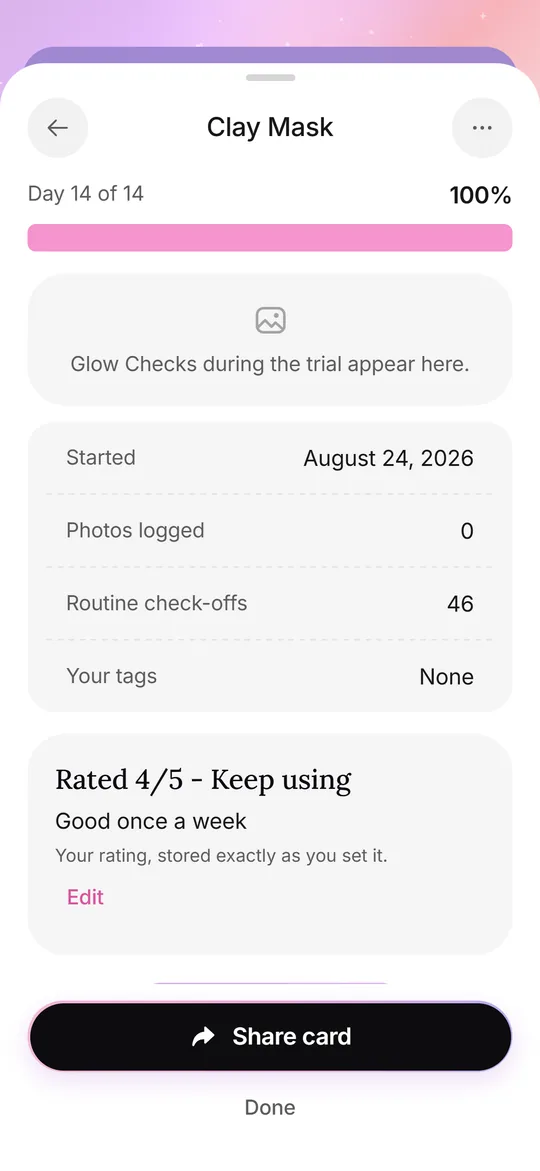
Glowproof, an iPhone skin photo diary in development, stores photos, tags and notes on the phone. When you start a Product Trial, the app files your daily photos and routine check-offs under it. You can add a New product tag to the day and write a note about the patch. The light check compares each photo with your Day 1 photo for brightness, left and right balance and warmth, so that a photo taken under a different lamp is flagged. The app does not look at your skin and does not decide whether something is a reaction.
Photos and notes stay on your iPhone, and there is no account. The page on private on-device storage explains what is kept and what leaves the phone.
When should you talk to a professional?
Talk to a pharmacist, doctor or dermatologist if you have a history of allergies or eczema, if you react to products often, or if you are unsure which ingredient caused a reaction. A log of dates, products and photos is useful to bring. It is not a replacement for advice.
What about products you already use?
New batches and reformulated products happen. A brand can change a formula without changing the name. If a trusted product suddenly feels different, check the ingredient list against your old note or photo of the pack. It takes a minute and can explain an unexpected change. Keeping a photo of each label in your notes is a cheap habit that pays off the first time it matters.
How do you introduce several products over time?
Space them out. Introduce one product, finish its trial, then start the next. A gap of at least a week between new products makes it easier to link a reaction to the right one. Write the start date of each in the same place. If you are impatient, remind yourself that two products in the same week give you the same information as none.
How do you photograph a patch?
Photograph the area before you apply anything, and again at each check. Use the same distance and the same daylight. Include a coin or a ruler for scale if you like, so that you can tell later whether a mark grew or shrank. A photo removes the argument with yourself the next day about whether the skin looked different. Keep these photos in the same private place as your other skin notes, and delete them when you no longer need them.
Frequently asked questions
How do I patch test a skincare product at home?
Apply a small amount to a coin-sized spot, such as the inner forearm, leave it for the time the label suggests, and check it. Log the date, place and result.
How long should a patch test last?
Follow the brand's instructions. Many suggest a day or more, and some suggest longer. The label comes first.
Does a clear patch test mean a product is safe?
No. It lowers one kind of risk. Facial skin can still react differently, so introduce the product slowly.
What should I do if I have a reaction?
Wash the area with water, stop using the product and ask a pharmacist or doctor. Seek urgent help for severe symptoms.
Can an app tell me if I am allergic?
No. Glowproof stores your own notes and photos. It does not analyze your skin.
Keep exploring
 Routine and trialsYour own AM and PM checklist, reminders, and 14, 28 or 42 day Product Trials.Journal ideasA five-line daily entry, a weekly review, a product log and tags you can reuse.Side by sideSlider or split compare, Day 7 and Day 28 moments, and old selfie vs today.